
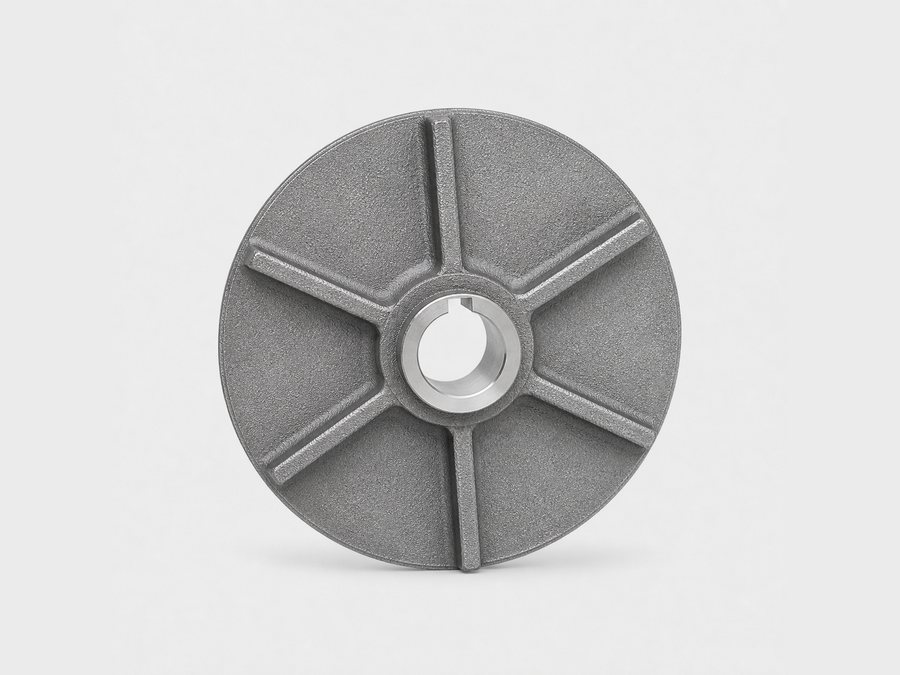
Vortex Impeller
Recessed into the casing. Solids pass through on the vortex without touching it.
The impeller sits back out of the flow path and spins the liquid into a vortex; the solids ride that vortex through the casing and out of the discharge. Most of what is pumped never touches the impeller at all.
It is the least efficient construction there is and it is specified anyway, because in sewage and in solids-laden duty an impeller that never touches the solids does not wear and does not block. Uptime beats efficiency in that service.
| Casting process | Vertical-line sand moulding on two lines (national patent) |
| Materials | Grey iron · ductile iron · WCB carbon steel · CF8M stainless |
| Machined features | Bore and keyway · hub face · vane face · balance correction |
| Minimum order | 100 pieces |
| Certification | EN 10204 3.1 per heat, spectrometer results |
| Source of geometry | Your drawing, 3D file or a worn sample |
What Is Difficult About This One
Every casting has one or two features that decide whether the batch repeats. On this part they are these.
Recessed vanes, deep pattern
The vanes sit back inside the hub. The draw is deeper than it looks and the taper has to hold all the way in.
Thick sections where it does get hit
Whatever does reach the impeller arrives at full velocity. Section is generous rather than optimised.
Hub is the feed path
Metal is fed through the hub outward into the vanes, so the hub is the last thing to freeze.
Alloy Options
The same geometry is a different part in three different plants. Chloride content, abrasion and temperature drive the choice — not the name of the fluid.
| Alloy | Grade | When it is the right choice |
|---|---|---|
| Grey iron | HT200 / HT250 | Default for water duty. Damps vibration, machines easily, lowest cost. |
| Ductile iron | QT450 / QT500 | When the duty is cyclic or the part takes shock. Tougher than grey. |
| WCB carbon steel | ASTM A216 WCB | Higher strength, weldable. For pressure-bearing bodies. |
| CF8M stainless | ASTM A743 CF8M | Chloride and corrosion duty — the cast equivalent of 316. |
What to Send Us
These are the ones specific to this part. A drawing, a 3D file or the worn original covers all of them at once.
| Item | Why it matters |
|---|---|
| Solids size and type | The largest sphere that has to pass, and what it is made of |
| Shaft diameter and key size | Bore and keyway |
| Casing recess depth | How far back the impeller has to sit |
Others in Impellers
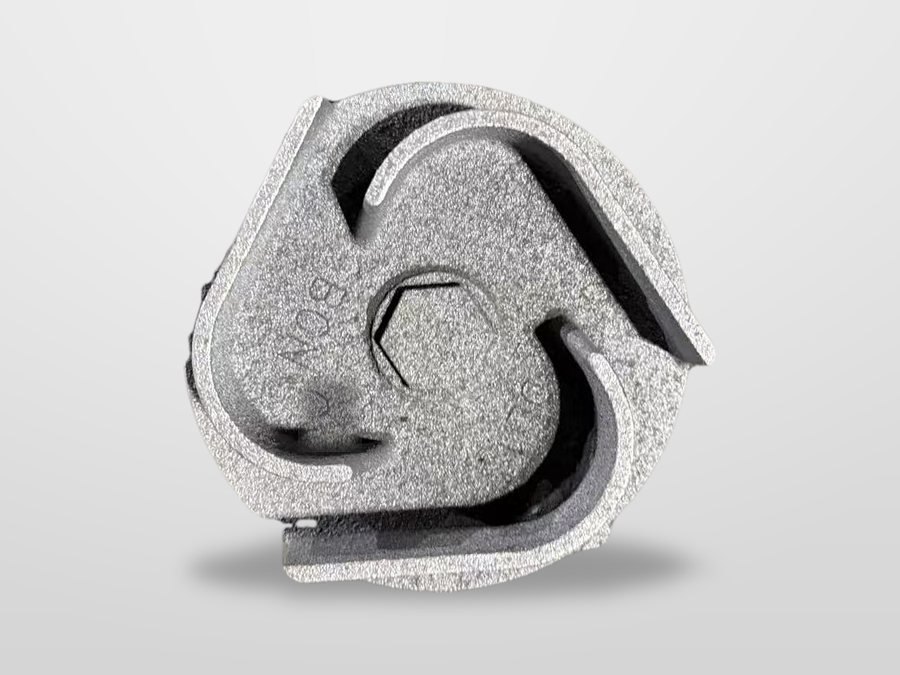
Semi-Open Impeller
Back shroud only. The vanes run open against the casing face.
View ›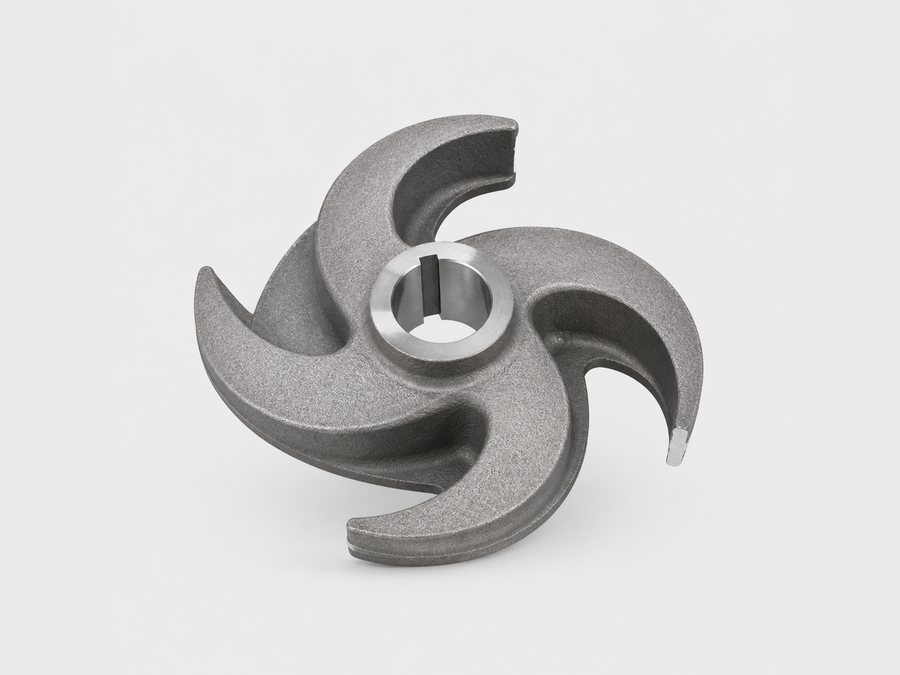
Open Impeller
No shroud at all — vanes on a hub, clear through from both sides.
View ›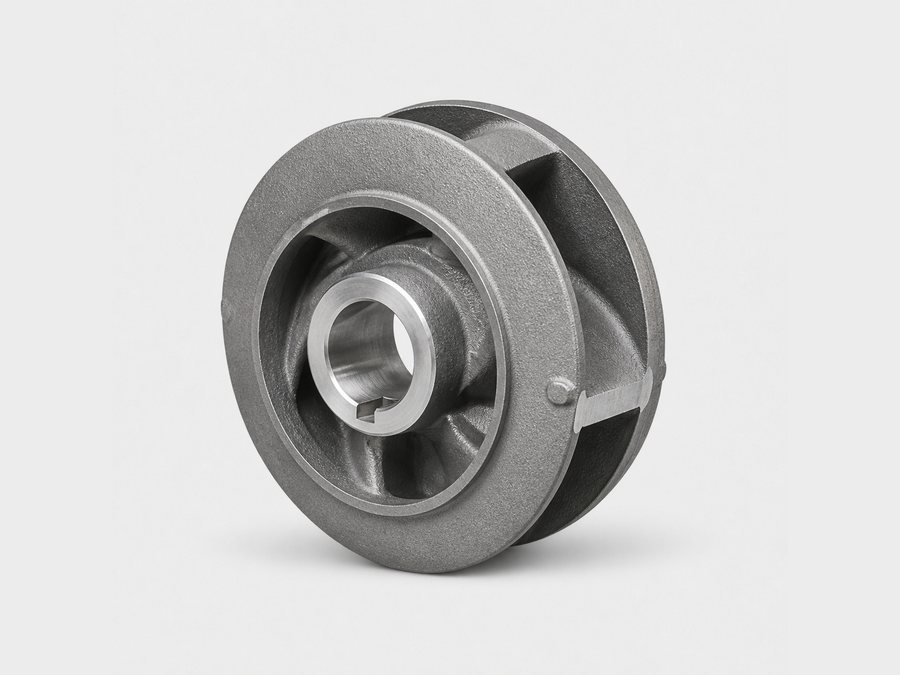
Double-Suction Impeller
Flow enters from both sides, so the axial thrust largely cancels itself.
View ›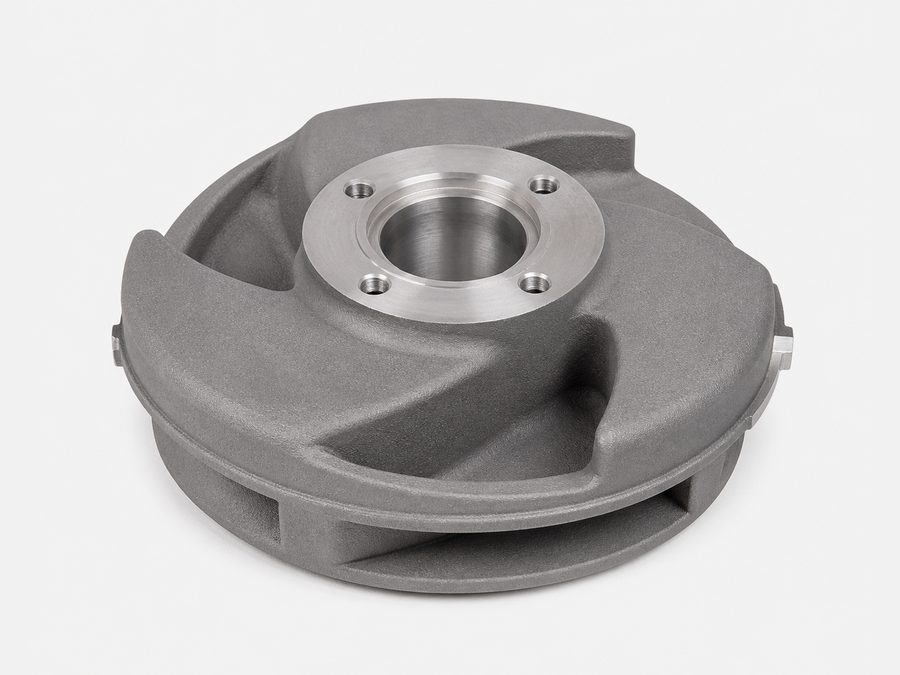
Slurry Impeller
Thick sections and few wide vanes — designed to wear out and be replaced.
View ›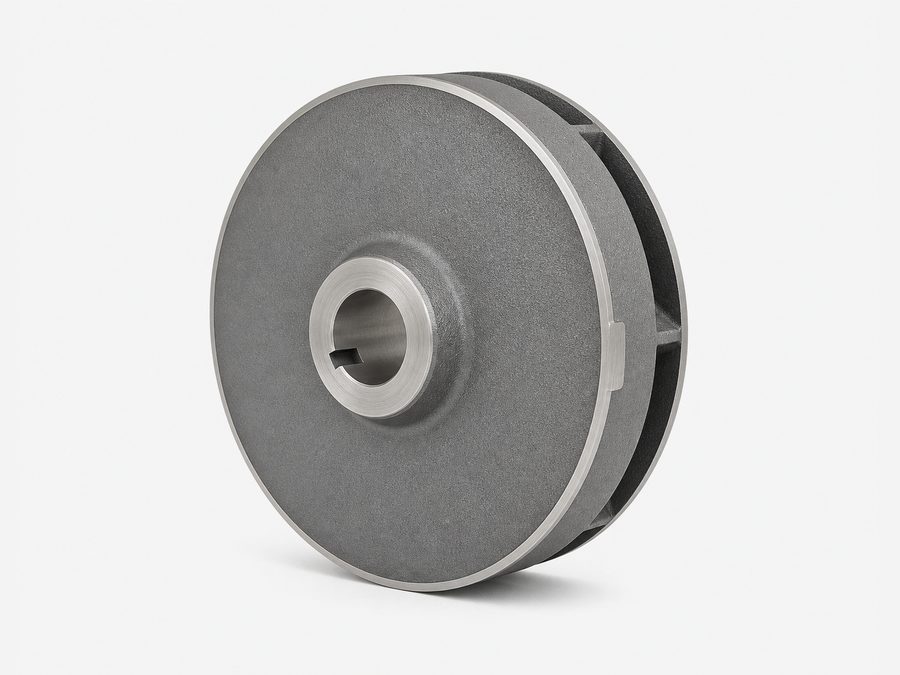
CF8M Stainless Impeller
Cast 316 equivalent, for chloride and chemical duty
View ›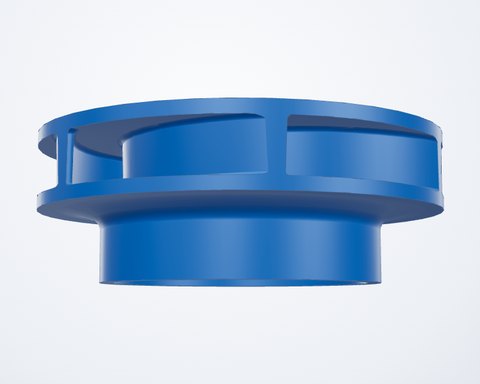
Closed Impeller
205 × 205 × 52.5 mm · 3D model
View ›